
Like this
Do you have any concerns?

-

The judgment depends on the person.
Judgment is based on feel for sound and vibration quality, leading to ambiguous standards.
-

There are safety concerns.
It is necessary to touch rotating or operating parts of the product for inspection.
-
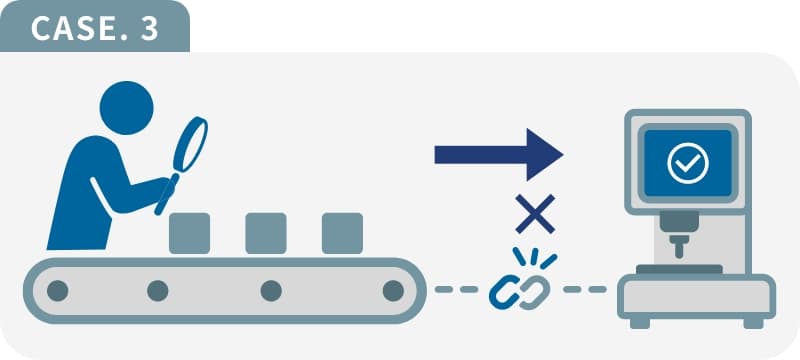
Automation is difficult.
Commercially available measuring instruments cannot be incorporated into the inspection process, hindering labor saving.

We'll solve your problem.
-
Conventional testing

The operator judges by sound and vibration.
The criteria vary from person to person.
Inspection work in hazardous conditions
Recording and managing results is also done manually.
-
After introduction
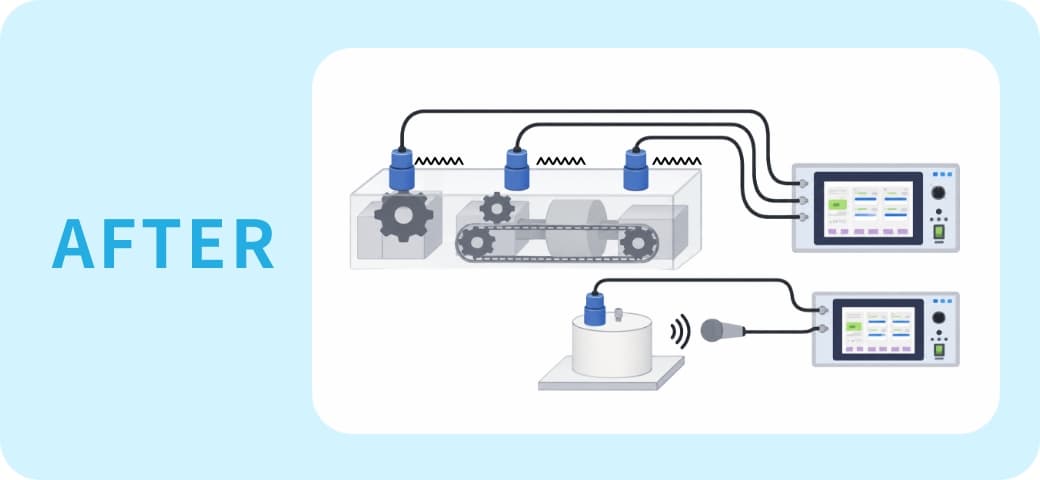
Automatically acquire sound and vibration using sensors.
Eliminate variations with automated decisions based on numerical values
Achieve non-contact and safe inspections
Automatically record and manage inspection results
Product Overview "DSVI Series"
Inspection device "DSVI Series" for automatic quality judgment of sound and vibration
Quantifies inspections that relied on human senses, preventing judgment variations.
-
01|
Create inspection standards easily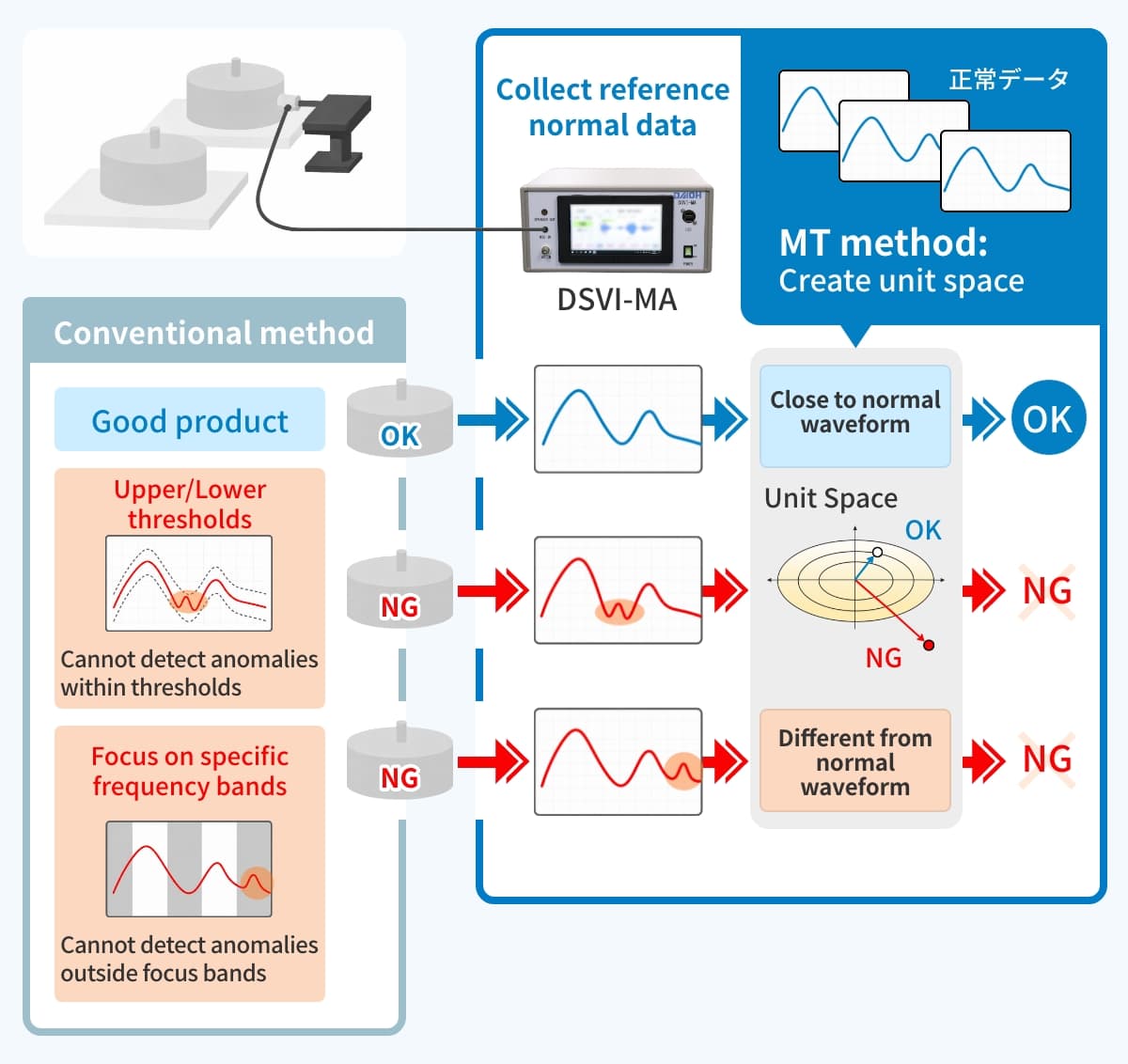
You can create inspection criteria just by registering good data.
You can start operating in a short period of time without specialized knowledge. -
02|
Integrate necessary functions for inspection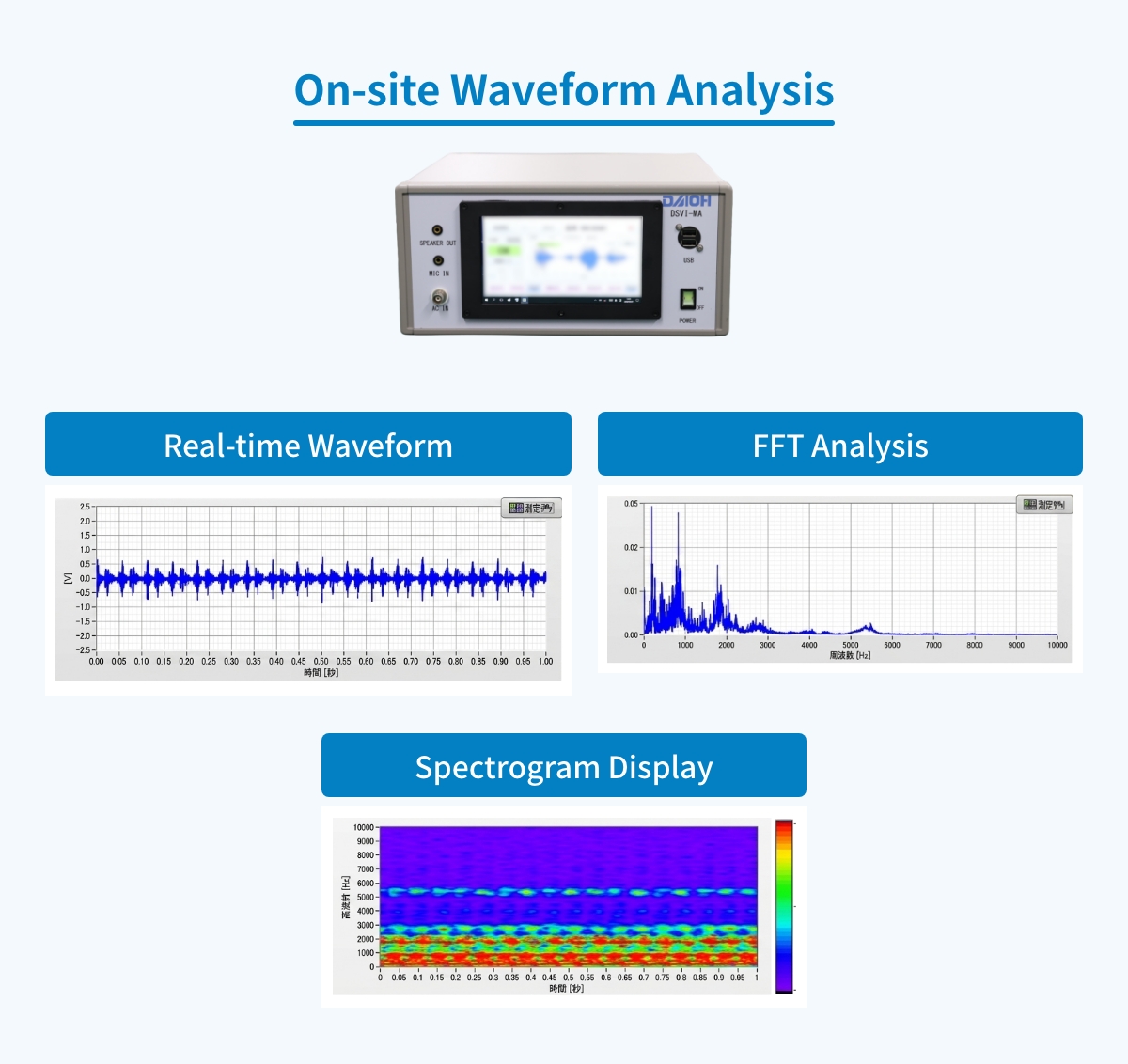
Measurement, analysis, judgment, and storage are all completed within the device.
Inspection and result confirmation can be done on-site without an external PC.Real-time waveform display
Frequency analysis
Create inspection standards
Save result list
Waveform data save/read
-
03|
Supports multi-point and multi-axis inspection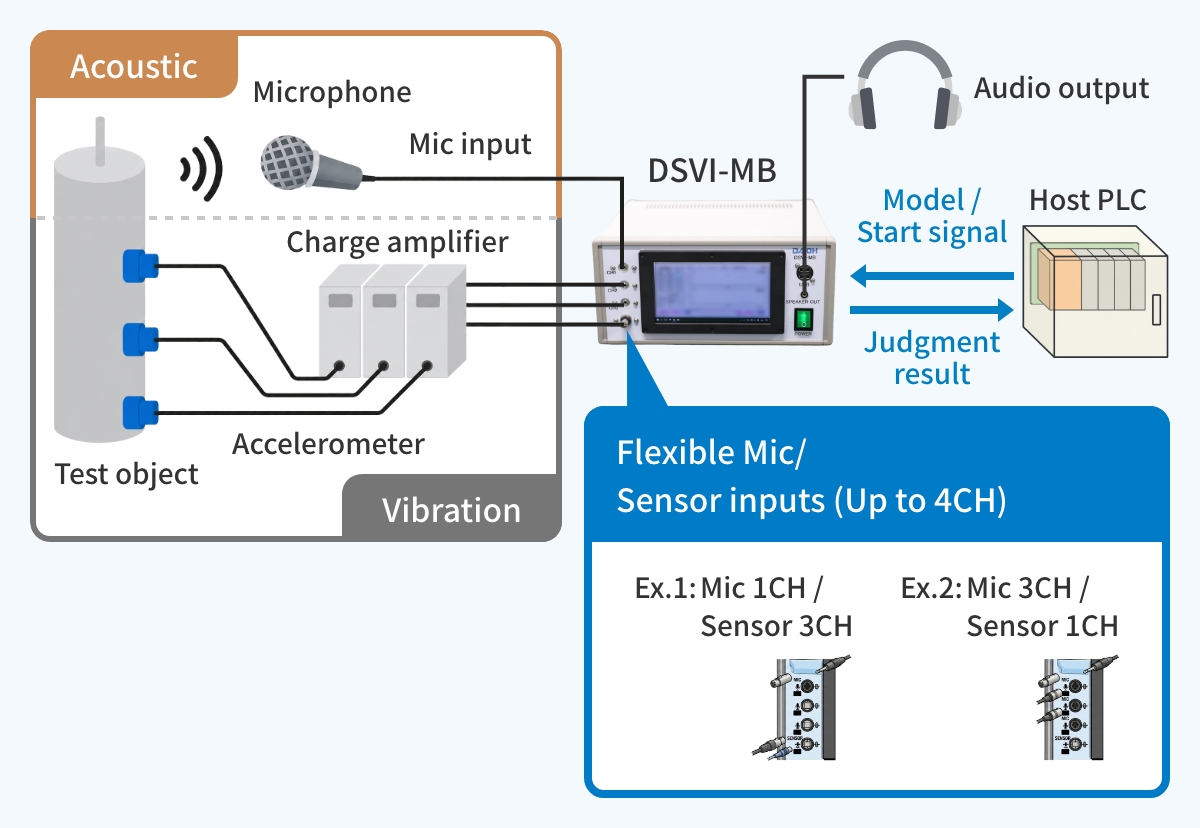
Simultaneous inspection of sound and vibration, and multi-directional evaluation are possible with multiple sensor inputs.
We support flexible inspections according to product characteristics. -
04|
Easy to implement options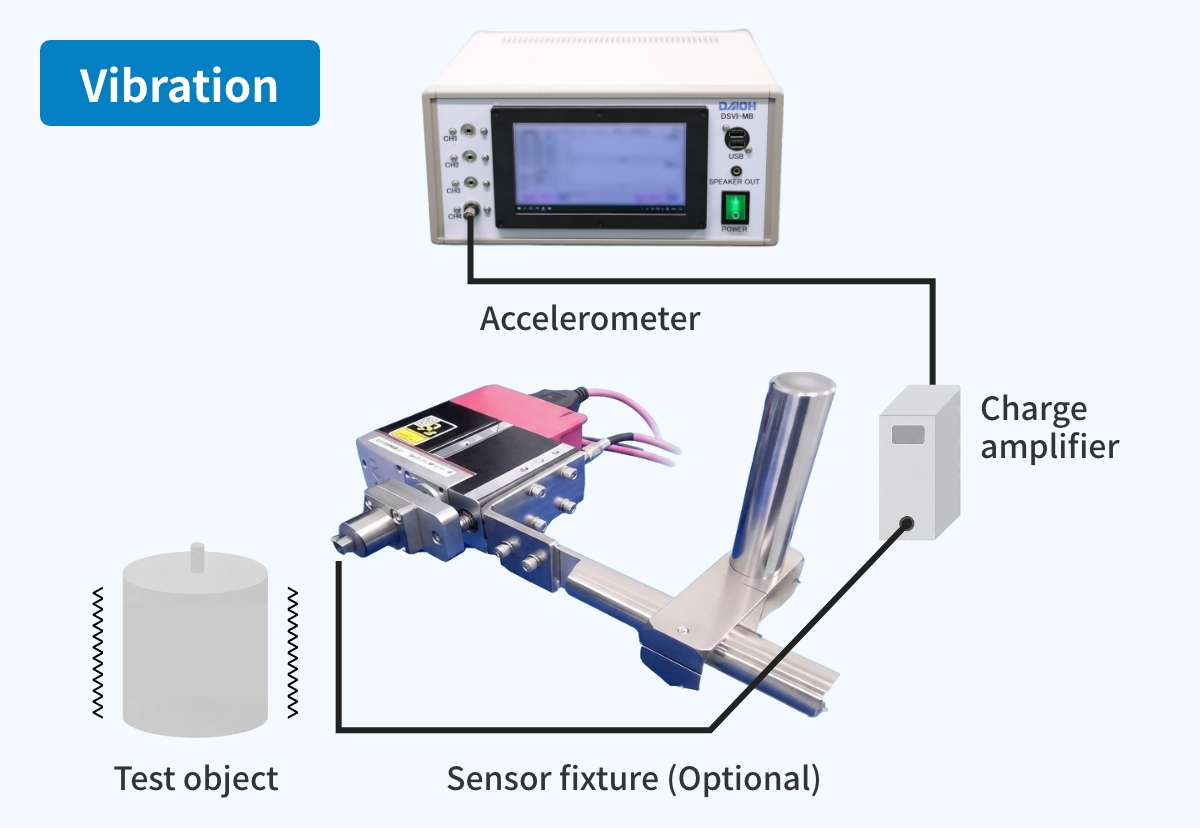
Prepare the sensor mounting jig for a smooth startup.
Here are some case studies
01|
Eliminate variability in hearing tests and automate the testing process
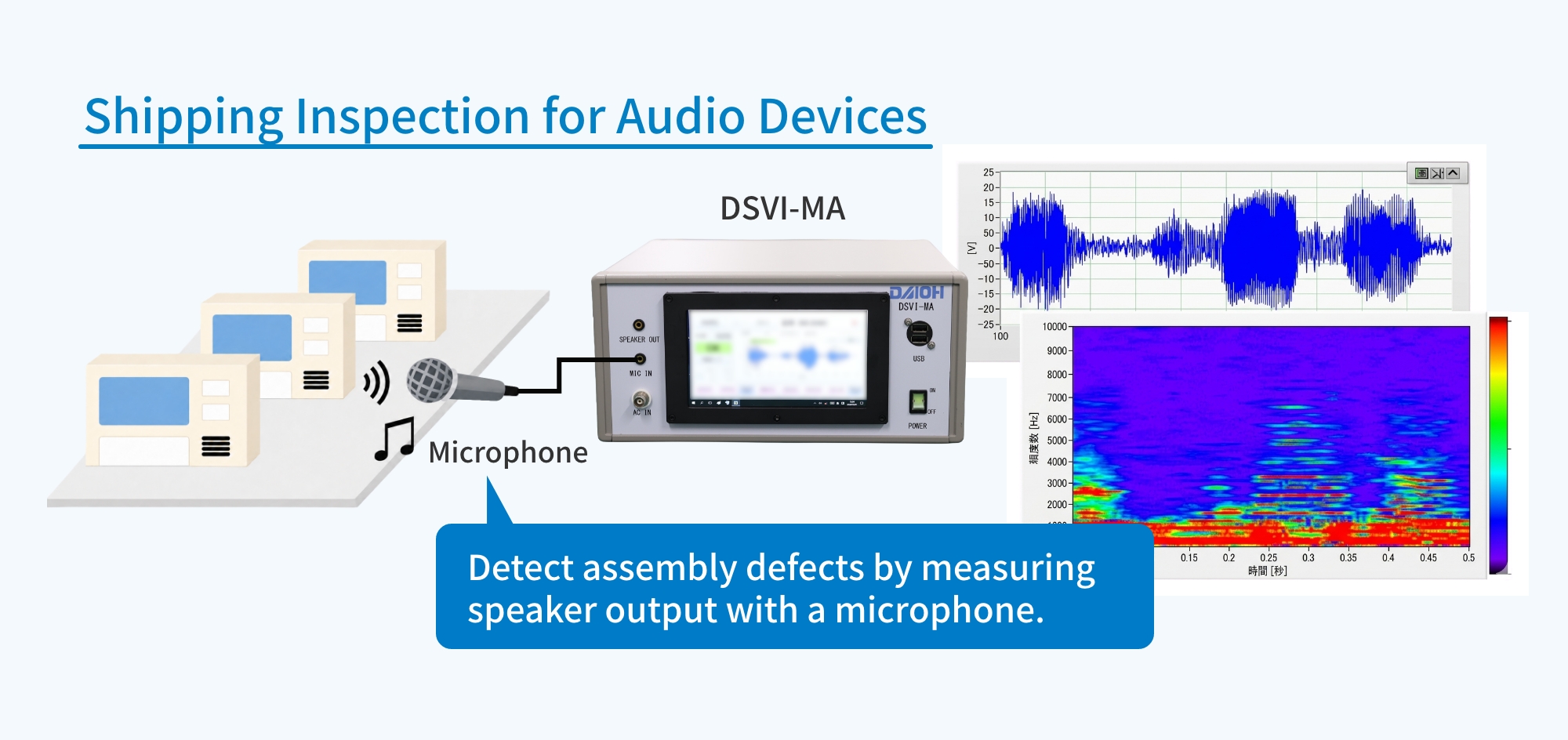
| Customer Challenges | The sound quality of audio output devices was judged by human hearing, which led to ambiguous standards and inconsistencies. |
|---|---|
| This product's solution | By acquiring and digitizing sound and vibration using a microphone, and performing automatic judgment, we are replacing inspections that rely on human hearing. Achieve highly reproducible inspections that can be judged by anyone according to the same standards. |
02|
Eliminate variability due to human senses and automate inspections.
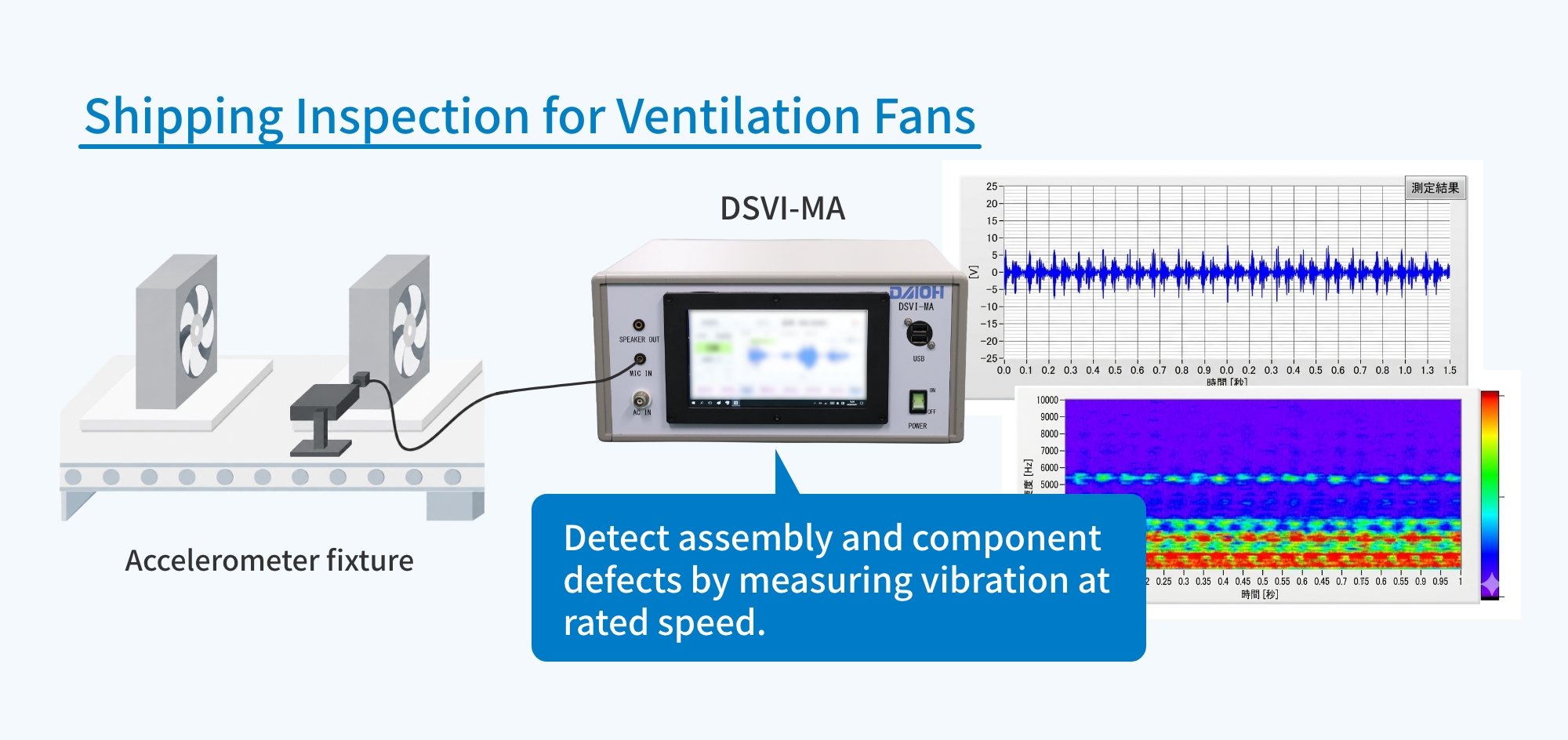
| Customer Challenges | The judgment of ventilation fan vibration quality relied on human tactile sensation, leading to ambiguous criteria and variability. |
|---|---|
| This product's solution | Replace inspections that rely on human touch by acquiring and digitizing vibration data with an accelerometer for automatic judgment. We achieve highly reproducible inspections that anyone can judge by the same standards. |
Introduction video
Judgment technique (MT method)

This product employs a decision algorithm that uses the Mahalanobis-Taguchi (MT) method.
By defining the normal state based on good quality data and quantifying the distance from the measurement data, we can determine the presence of abnormalities. This enables high-precision abnormality detection that does not rely on human senses.